
Friday, April 3, 2015

Carnage: 600 cars toasted by massive dealership fire
Nearly 600 cars were destroyed when a huge fire broke out at a used car dealership on Friday in South Korea's second largest city of Busan. Due to the extent of the blaze, around 200 residents were evacuated from their houses in the residential areas around the dealership. No one was injured or killed in the incident, but loss to property was estimated at around three million US dollars according to the County fire officials.
BREAKING NEWS FROM AMERICA - BREAKING NEWS FROM AMERICA


Ira Nuclear Deal for dummies - Explication of what was the actual accord done in Switzerland

After 18 months of negotiating, Iran has come to a preliminary agreement with China, Russia, France, UK, US and Germany (P5+1) on Tehran’s nuclear program. But what is Iran giving up to seal the deal and how can it benefit in the long run?
Uranium enrichment – Iran has agreed to only enrich uranium to 3.67%
What is it? The process of turning uranium found in the ground into nuclear fuel that can be used to create nuclear energy, or potentially a nuclear bomb.
Why is it important? To build a nuclear bomb, uranium needs to be enriched to about 90 percent. The 3.67 percent agreed by Tehran means it would be practically impossible for Iran to build a nuclear weapon, but would allow it to use nuclear material for peaceful purposes.
The outcome: Iran gets to keep its nuclear program, albeit a limited one, while the likes of the US now know it will be much harder for Tehran to build a bomb.
Centrifuges – Iran cuts centrifuges from 19,000 to 6,104, with 5,060 for enrichment
What are they? Centrifuges are vital to extract nuclear fuel from uranium in its mineral form. They work by spinning around at high speeds, which separate the different particles, eventually just leaving enriched uranium
Why are they important? The 6,000 or so centrifuges Iran has been allowed to keep are first generation and not the technically-advanced modern versions. This is like comparing a regular family car with a Formula 1 car, with Iran getting the former. If Tehran wanted to build a bomb now, it would take a very long time.
The outcome: Israel and US Republicans wanted Iran to give up all its centrifuges, while Barack Obama was originally prepared to let it keep 6,500.
Uranium stockpiles – Iran to cut the amount it keeps from 10,000kg to just 300kg
What are they? Uranium is the key ingredient necessary in order to operate a nuclear program. Once it has been enriched, it can be used to generate power or create a nuclear weapon.
Why are they important? By giving up 97 percent of its uranium stockpiles, Tehran has effectively given up any possibility to create a nuclear bomb.
The outcome: By reducing its stockpiles, Iran has increased transparency with the International Atomic Energy Agency (IAEA), while also making a commitment to use its nuclear program for peaceful purposes.
Inspections – IAEA will have access to all Iran’s nuclear facilities
What is it? The IAEA is an organization that promotes the peaceful use of nuclear power and is against the building of nuclear weapons that are used for military purposes.
Why is it important? This will allow the international community to see if Iran is keeping its end of the bargain. The IAEA will be able to monitor everything concerning Tehran’s nuclear program – from the reactors to the materials, such as uranium and centrifuges.
The outcome: With such transparency in place, it would be almost impossible for Iran to develop a nuclear weapon without getting caught.
Sanctions – Iran will see crippling sanctions lifted, if it keeps its end of bargain
What are they? The latest sanctions were introduced against Iran in 2006 after Tehran refused to halt its uranium enrichment program.
Why are they important? Sanctions introduced against Iran have had a devastating effect on its economy. Areas such as oil and gas have been affected, while Tehran’s finance sector was also hit. This made it difficult for to trade on the world market, while areas such as Iran’s aviation industry suffered, as they were unable to get spare parts from the US and the West.
The outcome: The sanctions will only be fully lifted once Iran has proven it has stopped its nuclear enrichment program. Once they are lifted, it will be a massive boost to Tehran’s economy as it will increase trade and see new investment into the country.
Fallout from Iran nuclear deal
If Iran keeps its end of the deal, the West will know Iran’s nuclear program is peaceful. For Tehran, it will be able to produce nuclear energy, while also be showing to the Iranian public that it has not caved in to the demands of the US and its allies.
The nuclear deal reached between Iran and the P5+1 group (China, France, Russia, UK and US) and Germany is a victory in diplomacy. However, it has the potential to destabilize the region, with Saudi Arabia and Israel both wary of any thawing of relations between Iran and the West. Riyadh has already stated it wants its own nuclear program, while Israel’s relations with Washington have hit their lowest point for years.
INC News, 03/04/2015 -via RT
Thursday, April 2, 2015
KENYA ATTACK: Garissa University assault 'killed 147'
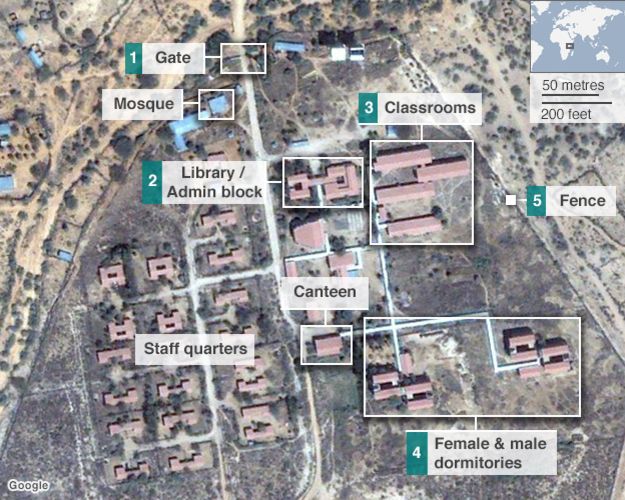
The death toll in the attack by al-Shabab Islamist militants on a university in north-eastern Kenya has risen to 147, Kenyan government officials say. They added that the operation to secure the the Garissa University College campus was now over, with all four attackers killed. The evacuation of surviving students is now under way. An overnight curfew is being implemented in parts of the country.
Four counties near the Kenya-Somalia border, Garissa, Wajir, Mandera and Tana River, would have dusk-to-dawn curfews imposed, disaster management officials said. Nine students were critically injured and airlifted to the capital Nairobi for medical treatment, they added.
Read article HERE
INC News, 02/04/2015 - via BBC
BREAKING NEWS FROM SWITZERLAND - BREAKING NEWS FROM SWITZERLAND
Tehran and world powers reach solutions on Iran nuclear program
Iran and international powers have reached “solutions on key parameters” of Tehran’s nuclear program following eight-day talks in Switzerland, according to a joint statement issued by the negotiators on Thursday.The agreement envisages the Fordow facility being converted into a nuclear physics center with no fissile material. It was agreed that the Natantz facility would remain as the only nuclear power plant in the country. Under the deal Tehran was obliged to refrain from creating nuclear weapons.
Subscribe to:
Posts (Atom)